Flavor is not found. It is built.
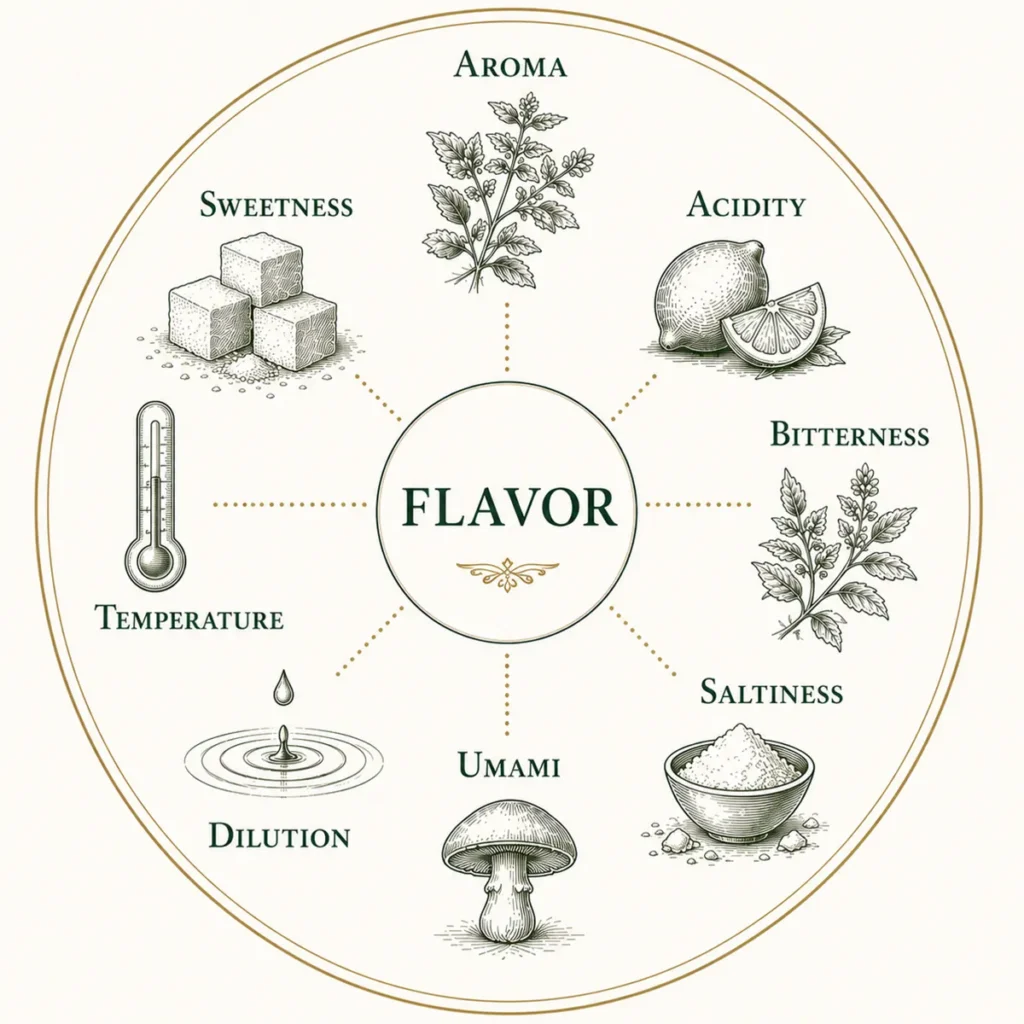
Every finished drink or dish is the result of small decisions. An ingredient is chosen. Heat is applied or withheld. Sweetness, acidity, bitterness, aroma, texture, temperature, and dilution are brought into balance. No single choice stands alone. Together they determine the character of what is in the glass or on the plate.
Flavor Lab explores those decisions.
Understanding Begins with Why
Recipes tell us what to do. Understanding begins with asking why.
Why does one syrup brighten while another adds weight? Why does gentle heat deepen one flavor and erase another? Why can fat hold an aroma that water leaves behind? Why does a small shift in acidity change the way sweetness is perceived?
Those questions turn recipes into lessons in flavor. Every ingredient has a purpose. Every technique has a consequence. Every choice leaves its mark.
Ingredients Are Tools
A syrup does more than sweeten. Citrus does more than add acidity. A tincture carries aroma in very little volume. Water, alcohol, sugar, fat, heat, and time each extract, carry, or change flavor in their own way.
There are few absolute rules. There are principles that can be observed, tested, and understood. The right method is the one that achieves the intended result without unnecessary complication.
Use Everything
Using everything is more than a rule against waste. It is a way of noticing what an ingredient can still give.
A rotisserie chicken becomes several meals and then stock. Dried chiles become a powder that shifts with the season and the dish. Citrus peel, herbs, fruit, and spices move through syrups, tinctures, sauces, and whatever comes next.
Each begins with the same question: What else can this ingredient do?
Beyond the Glass
Flavor Lab grew from our work at Occasio Winery and Sidewinder Spirits, but it does not stop at the glass. The same principles apply to a syrup, a wine or spirit, a sauce, a meal, or a cup of coffee or tea.
The recipes and experiments collected here are practical examples, not formulas to follow without question. Change one element, taste again, and notice what follows.
Taste often. Compare carefully. Stay curious. Ask what changed, why it changed, and what might happen with a different choice.