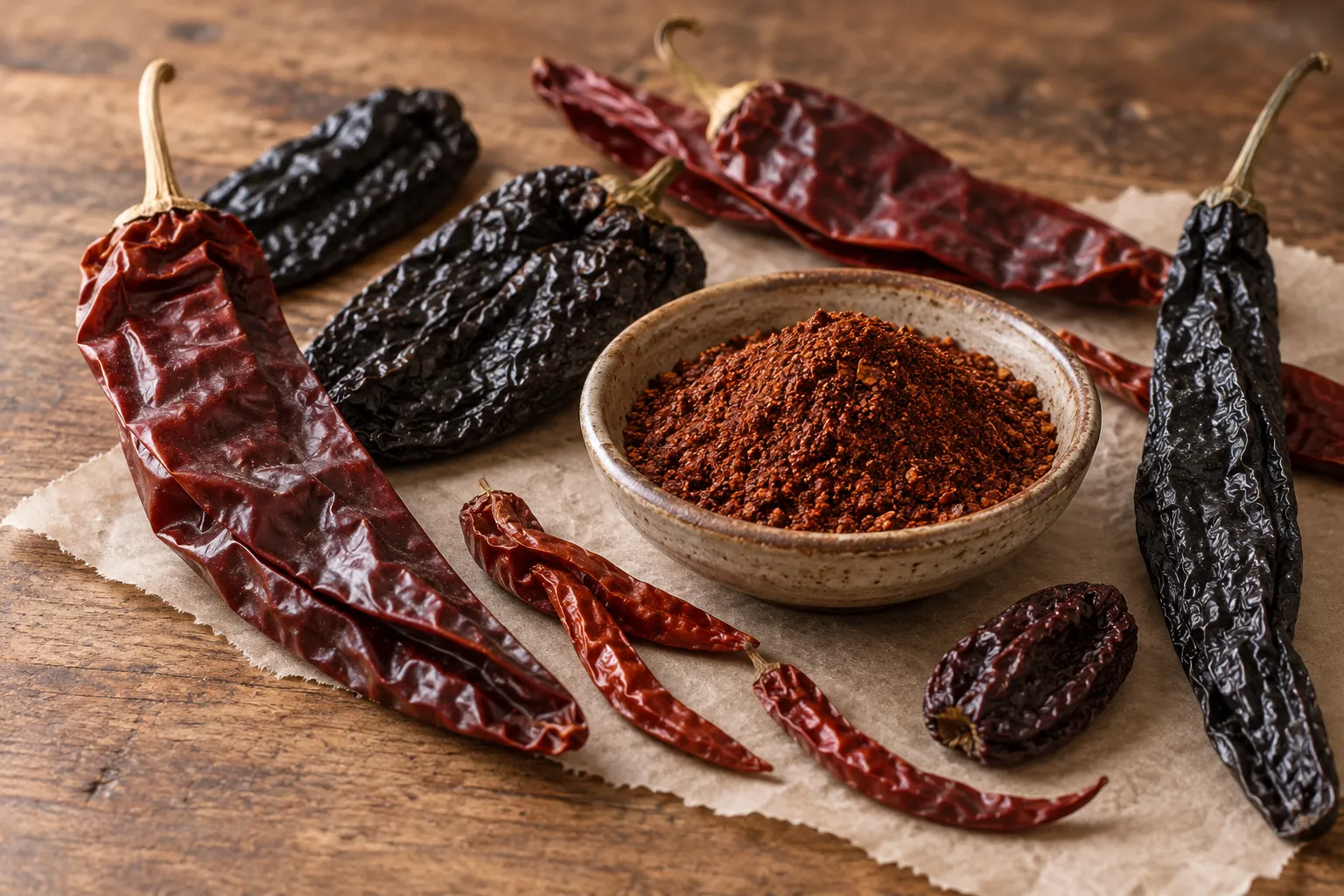
Chile powder here is not a fixed recipe. It is a way of arranging flavor, and the proportions shift with the season and with the dish.
Ancho gives a mild, fruity foundation. Pasilla brings earth, raisin, and a hint of cocoa. Guajillo adds brightness. Morita and other chipotles supply smoke; chile de árbol supplies heat. In fall and winter, the blend leans smokier. In spring and summer, it stays lighter and fruitier. Change the balance and the same collection of dried chiles becomes a powder for chili, enchiladas, beans, sauces, or whatever comes next.
Ingredients
A Starting Blend
- 3 dried ancho chiles
- 2 dried guajillo chiles
- 1 dried pasilla chile
- 1 morita or other dried chipotle chile, optional
- 1 chile de árbol, optional, or more for additional heat
Method
Set a dry skillet over medium-low heat.
- Toast the ancho, pasilla, and guajillo in a single layer, turning them, just until fragrant and slightly pliable. The point is to release their perfume, not darken them.
- Toast the morita and chile de árbol separately. The smaller chiles heat quickly and burn easily. Transfer all the chiles to a plate and let them cool completely.
- Remove the stems. Cut the chiles open with kitchen scissors, shake out the seeds, and trim away the pith.
- Tear the chiles into pieces and pulse them in a blender or spice grinder to a coarse powder.
- Let the dust settle before opening the lid. Store the powder in an airtight container, away from heat and light.
Chile Powder, Not Chili Seasoning
Here, chile powder means dried chiles and nothing else. Commercial chili seasoning may also contain cumin, oregano, garlic, and salt. Keeping those out of the jar lets each dish determine its own seasoning.
Putting It to Work
Start with a small amount and adjust as the dish develops. Use the powder in beans, enchiladas, sauces, braises, or chili; when making the next batch, change the balance of chiles to suit what comes next.
When the dish allows it, warm the powder briefly in fat before adding liquid. Many of the aromatic compounds in dried chiles dissolve more readily in fat than in water. The fat pulls them from the powder, carries them through the dish, and holds some of the more volatile aromas so they release gradually. Perfumers rely on the same affinity in enfleurage, where a neutral fat captures fragrance from flowers.
Keep the heat gentle and stay close. Ground chiles burn quickly, and too much heat drives off the aromas you are trying to keep.