
Clarification changes how a drink looks. Depending on the method, it can also change how it tastes and feels. Milk clarification is a good example: removing the curds can leave a drink clearer, soften its bitter or drying edge, and give it a silkier texture.
In a wine punch, that softer edge can help the fruit, wine, and spices come together. In a cocktail, a milk wash can round out the finish, while toasted milk powder can bring a flavor of its own. The useful test is to taste the drink before and after the wash. A clearer glass is easy to spot; the difference in the sip tells you whether it was worth doing.
From the Cellar
Winemakers use casein, a milk protein, as a fining agent. It can bind with some of the phenolic compounds that contribute bitterness and astringency, allowing them to settle out. At the bar, a milk wash puts that same interaction to work in a finished drink.
The order of the pour is worth remembering. In fat washing, we add the fat to the spirit. In a traditional milk wash, the milk goes into the bowl first, and the acidic drink is poured into it. The acidity causes the milk proteins to form curds, which we let settle before straining.
Milk-Washed Red Sangria
The first time I milk-washed a red sangria, I was looking for clarity. What surprised me was how much better it tasted. The wine’s bitter edge softened, and the fruit, tea, and aromatics came together. Our Milk-Washed Red Sangria is a good place to try the technique.
What You’ll Need
- A prepared acidic punch or cocktail
- Pasteurized whole milk, measured according to your recipe
- A clear pitcher or bowl so you can see the sediment settle
- A sieve, several layers of clean cheesecloth, and an optional coffee filter
- Two clean containers, one for each pour
The Method
- Pour the drink into the milk. Put the milk in the pitcher or bowl. Slowly pour in the prepared drink and stir gently once.
- Let the curds settle. Cover and refrigerate until you can see a clearer layer above the sediment. In red wine, the curds may be so fine that they look like a dense layer of pink lees.
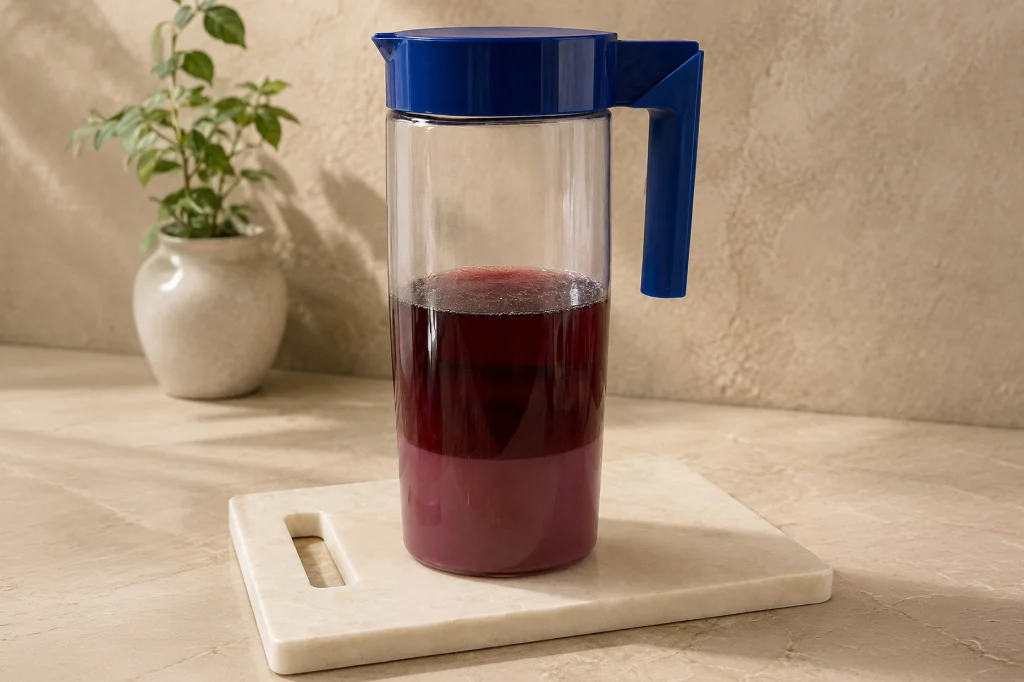
- Strain the free run first. Without stirring, gently pour the clearer liquid through the cheesecloth. Stop when the sediment starts moving toward the spout.
- Drain the curds separately. Let the denser portion drain by gravity into a second container in the refrigerator. It can take considerably longer. If that second pour is still hazy, pass it through a coffee filter before deciding whether to blend it back in.
- Taste before adjusting. Compare the washed and unwashed drinks at the same temperature. Notice how the bitterness, texture, and aroma have changed before adding more sweetener.
Scaling the Batch
Scale the wine, juice, infusion, and milk together. For a larger batch, divide it among pitchers so you can pour off the clearer liquid without disturbing the lees. Measure what you recover after straining. Some liquid stays behind in the curds, so use the filtered yield to plan servings.
Choosing a Milk-to-Drink Ratio
Start with the proportions in a recipe that works. A citrus-forward Whiskey Sour and a red wine punch bring different amounts of acid to the milk. If you’re adapting a drink, make two small batches and vary only the amount of milk. Compare how well the curds settle, what you recover, and which glass you’d rather finish.
Why This Method
The curds in a milk-washed wine can be fine enough to clog a filter. Letting them settle gives you a head start: most of the drink can be poured off before the dense sediment reaches the cheesecloth. Draining the lees separately lets you recover more of the batch and judge its clarity before blending it back.
Where to Use It
Start with Occasio’s Milk-Washed Red Sangria or Sidewinder’s Milk-Washed Apple Spice Whiskey Sour. Both already have the acidity needed to curdle the milk, and a citrus punch is another good starting point.
For an Old Fashioned, where lemon juice would change the balance, rehydrated milk powder offers another approach. Toasting the powder can add a nutty, caramel-like note. Kevin Kos demonstrates toasted dairy powder and coconut milk powder, building on Daniel Villa’s powdered milk technique.
Drinks clarified with dairy milk still contain milk after straining.