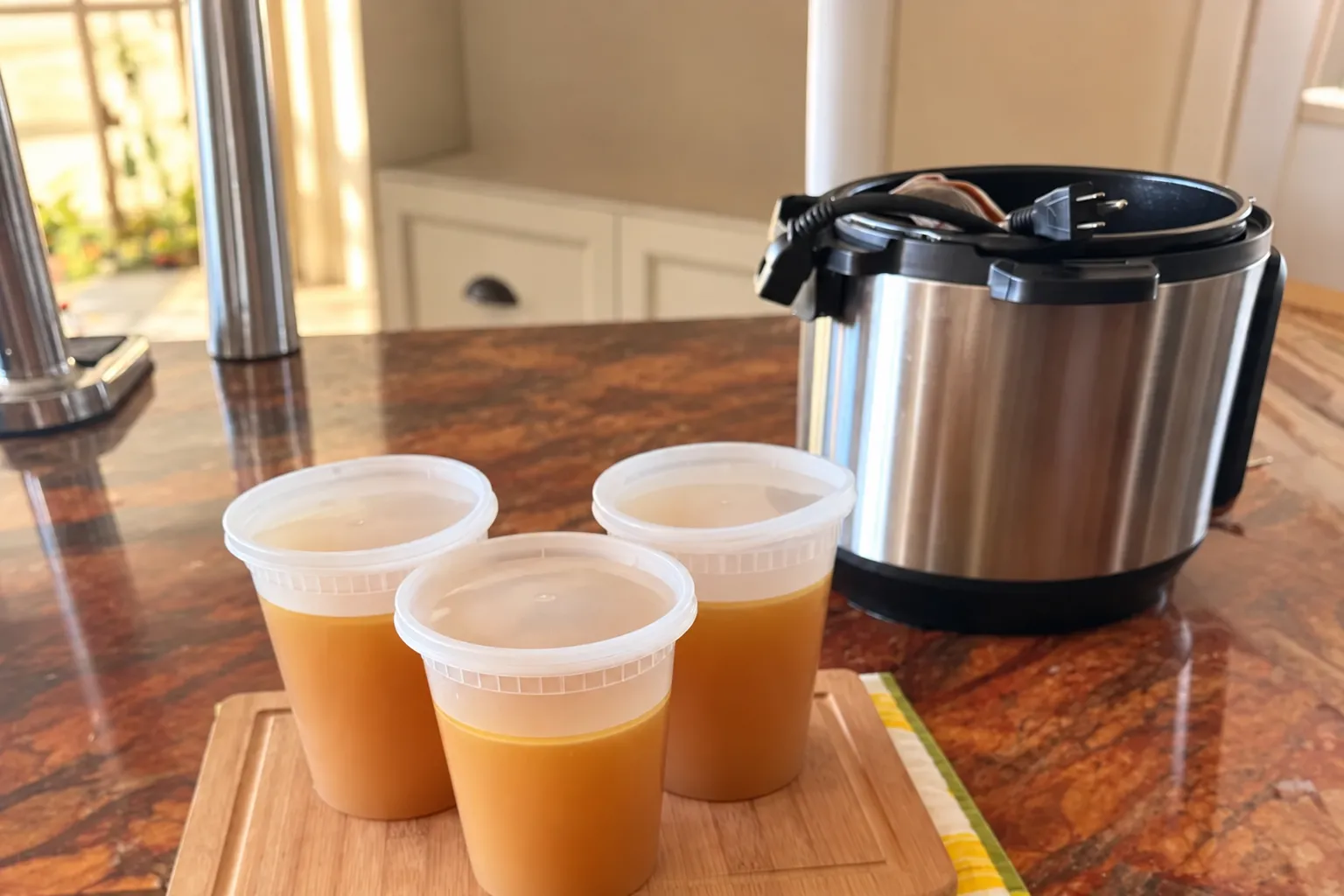
A rotisserie chicken does not end with the first meal. After you pull off the meat you want for dinner, put the rest of the carcass—skin, bones, and whatever meat remains—into the pot and turn it into stock.
This version starts by lightly browning onion, carrot, and celery in the pressure cooker. That small step builds a deeper base before the chicken and water go in. Using two quarts of water makes a richer stock; add more only when enough meat is left on the bird to support a larger batch.
Leave out the salt and herbs. The rotisserie chicken is already seasoned, and a neutral stock can be adjusted later to suit the soup, sauce, or casserole.
Ingredients
- Olive oil, enough to lightly coat the bottom of the pot
- ½ onion, diced
- 1 carrot, sliced into rounds
- 1 celery stalk, sliced
- 2 garlic cloves, finely chopped
- Carcass, skin, and remaining meat from 1 rotisserie chicken, pulled into pieces
- 2–3 quarts water, depending on the amount of chicken and desired concentration
Method
- Set the Instant Pot to Sauté and add enough olive oil to lightly coat the bottom. Add the onion, carrot, and celery. Cook, stirring occasionally, until the onion begins to brown lightly.
- Add the garlic and stir just until fragrant.
- Add the chicken carcass, skin, and remaining meat. Pour in 2 quarts of water for a richer stock. Add more water for a larger batch when enough meat remains on the chicken, without exceeding the pressure cooker’s maximum-fill line.
- Cancel the Sauté setting and secure the lid. Cook on High Pressure for 40 minutes.
- Allow the pressure to release completely on its own—usually about 20 minutes. Wait until the float valve has dropped before opening the lid.
- Remove the largest pieces of chicken, bone, and vegetables with tongs or a slotted spoon.
- Pour the stock through a fine-mesh strainer into a heatproof container.
- Let the stock cool, then divide it among freezer-safe 1-quart containers, leaving room for expansion. Cover, label, and freeze.
Why This Method
Pressure cooking pulls flavor and body from the carcass quickly, but the sauté still matters. Lightly browning the onion, carrot, and celery first builds a deeper base before the chicken and water go in.
The water sets the concentration. Two quarts produce a richer stock. More water produces a larger, lighter batch.
A Quart at a Time
One quart is four cups—the amount used in the Rotisserie Chicken Pot Pie Casserole. Freeze the stock in one-quart containers and it becomes a ready ingredient instead of something to measure later. Left unsalted and unseasoned, each container can take on the character of whatever comes next.