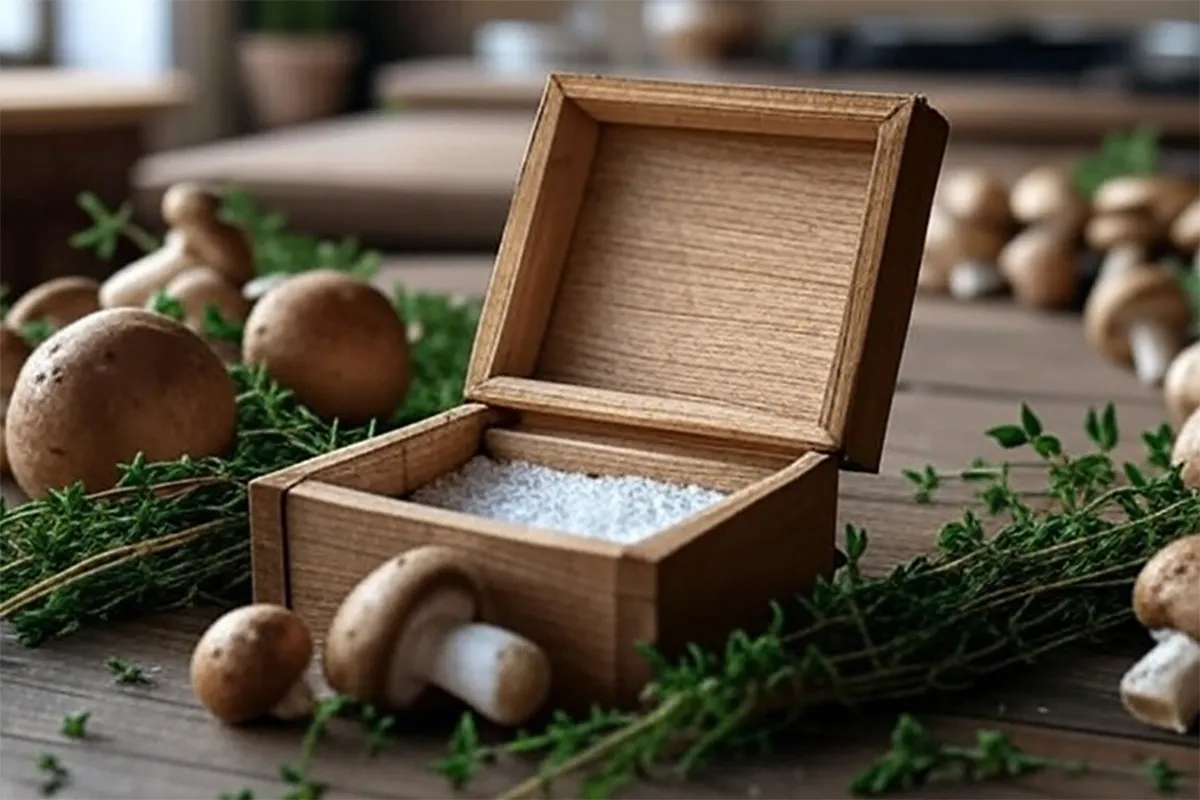
Mushroom stems, tomato skins, and leftover wine still have something to give. Drying or reducing them concentrates their flavor, turning small kitchen leftovers into seasonings for the next meal. Mushroom salt brings savory depth, tomato salt adds a bright accent, and a sweet-savory wine blend combines fruit, herbs, and citrus. These are starting points rather than fixed formulas—make a small batch, taste it on food, and adjust the balance to suit what you cook.
Ingredients
Mushroom Salt
- ¼ cup kosher or coarse sea salt
- 1–2 tablespoons finely ground, thoroughly dried mushroom stems
- ¼ teaspoon dried thyme or rosemary, optional
Tomato Salt
- ¼ cup kosher or coarse sea salt
- 1–2 tablespoons finely ground, thoroughly dried tomato skins
- ¼ teaspoon dried basil or oregano, optional
Wine Seasoning Salt
- 2 cups leftover red or white wine
- ¾ cup kosher or coarse sea salt
- 1 cup granulated sugar
- 2 teaspoons dried thyme
- 1 teaspoon finely ground dried lemon zest
This variation contains both sugar and salt. Treat it as a sweet-savory seasoning rather than a direct replacement for plain salt.
Method
Mushroom and Tomato Salts
- Prepare the scraps. Use fresh, sound ingredients. Clean mushroom stems and slice them thinly. Spread tomato skins out rather than leaving them folded or piled together.
- Dry thoroughly. Arrange in a single layer in a food dehydrator at approximately 135–140°F, following the appliance’s instructions. Alternatively, use an oven that can maintain a low drying temperature. Dry until crisp and brittle; the time will depend on thickness, airflow, and equipment.
- Cool and grind. Cool completely, then grind in a spice grinder or crush with a mortar and pestle. If pieces remain pliable, continue drying before grinding.
- Blend. Combine ¼ cup salt with 1 tablespoon of mushroom or tomato powder and the optional dried herbs. Add more powder to taste. For a finer seasoning, briefly pulse the mixture in a grinder.
- Jar. Transfer to a clean, completely dry, airtight container. Label with the ingredients and date.
Wine Seasoning Salt
- Reduce the wine. Simmer the wine gently in a small saucepan until approximately 2 tablespoons remain. Watch closely near the end to prevent scorching. Let cool.
- Combine. Briefly pulse the salt, dried thyme, dried lemon zest, and cooled wine reduction in a food processor. Add the sugar and pulse until evenly distributed.
- Dry. Spread thinly on a lined tray. Dry in a dehydrator with a suitable liner or in a low oven, breaking up the mixture occasionally, until dry throughout.
- Cool and crumble. Cool completely, then break up any clusters. Keep it coarse or pulse briefly for a finer texture.
- Jar. Transfer to a clean, completely dry, airtight container. Label with the ingredients and date.
Why This Method
Drying removes water from mushroom stems and tomato skins, concentrating their flavor so they can be ground and distributed through salt. Adding the powder gradually lets you adjust the intensity. Kosher or coarse sea salt makes a practical base; if using delicate salt flakes, fold them in by hand to preserve their texture.
Wine takes a different route. Reducing it concentrates its acidity and flavor before it enters the blend. Sugar rounds out the seasoning and encourages browning during cooking, so use gentle heat or add it toward the end to avoid scorching.
Sprinkle mushroom salt over roasted vegetables, eggs, potatoes, or popcorn. Use tomato salt on sliced tomatoes, avocado toast, pasta, or grilled fish. Start lightly: both blends contribute salt as well as flavor.
Try the wine seasoning on pork, lamb, or roasted nuts. Its combination of wine, herbs, citrus, and sugar also makes an interesting cocktail rim—try seasoning just half the rim so you can taste the drink with and without it.
Storage
Keep the blends in clean, dry, airtight containers away from heat, light, and steam. Cool completely before sealing, and make small batches to enjoy their aromas at their best. Clumping alone does not mean spoilage, but visible moisture indicates incomplete drying or moisture absorbed during storage. Discard any blend showing mold or an unusual odor.