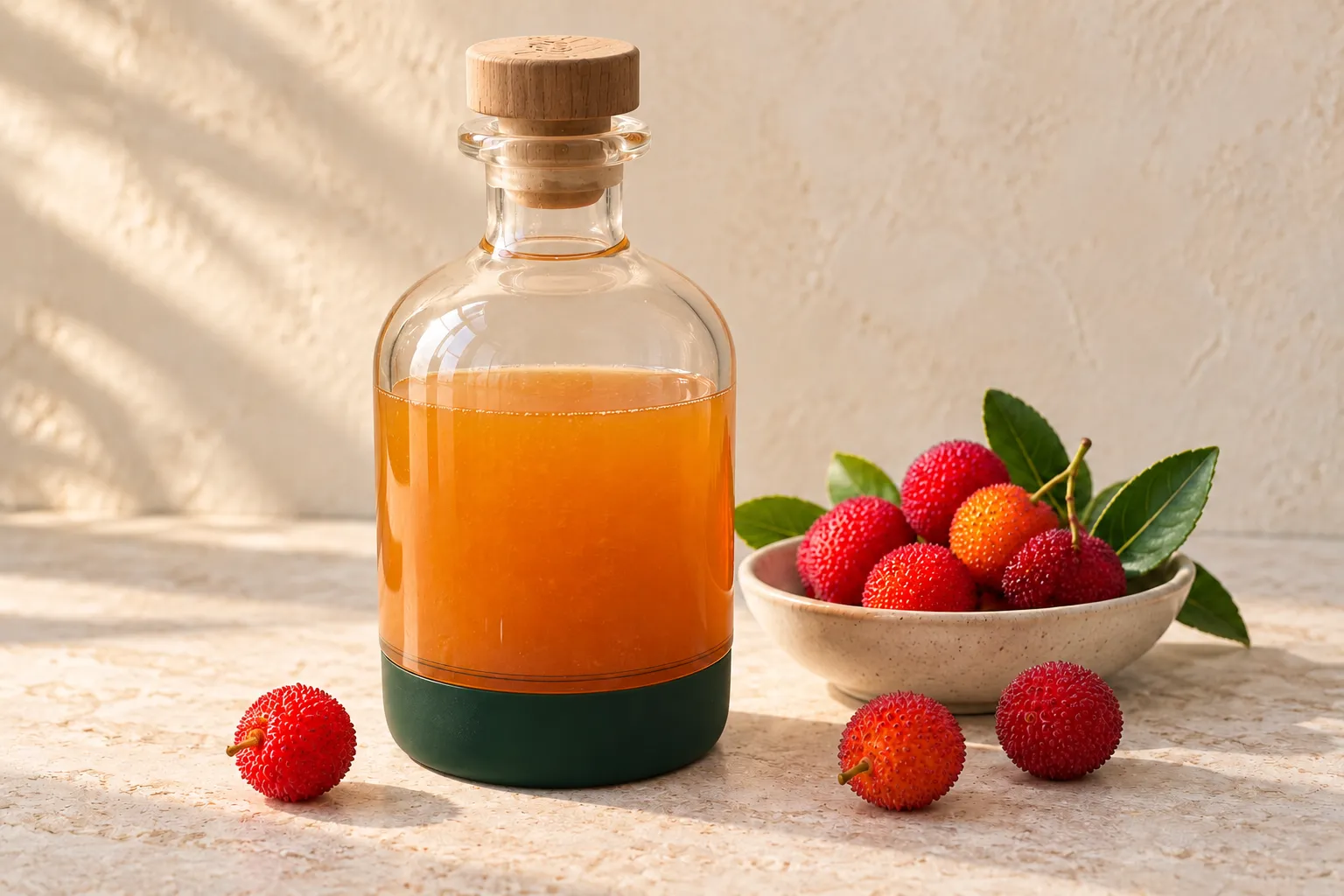
The strawberry tree outside Sidewinder produces bright red, textured fruit that is easy to admire and just as easy to overlook as an ingredient. This season, we decided to harvest some and see what it would bring to the glass.
Despite its name, Arbutus unedo offers something quite different from a familiar strawberry. We expected the syrup to lean tropical. Instead, our first batch brought pears and apricots to mind—a gentle fruit character beneath the berries’ striking appearance.
Ingredients
- 8 oz (227 g) ripe strawberry tree berries (Arbutus unedo)
- 8 oz (227 g) granulated sugar
- 1 cup (237 mL) water
Method
- Prepare the berries. Remove any stems, rinse the berries gently, and discard damaged or spoiled fruit.
- Combine. Place the berries, sugar, and water in a small saucepan.
- Simmer. Bring to a gentle simmer, stirring carefully to dissolve the sugar. Simmer for 5 minutes.
- Steep. Remove from the heat and let steep for 20 minutes.
- Strain. Pour through a fine-mesh sieve to remove the berries and larger solids. Fine pulp will remain in the syrup.
- Cool and refrigerate. Transfer to a clean container, cool promptly, and keep refrigerated.
Why This Method
For our first batch, we wanted to discover the flavor of the fruit itself. Berries, sugar, and water gave us a simple starting point, without citrus or spices shaping the result.
A gentle five-minute simmer dissolves the sugar and begins extracting flavor from the berries. A twenty-minute steep continues the infusion off the heat, keeping the cooking brief. In our batch, this produced an orange-gold syrup with gentle peach-and-apricot notes.
A mesh sieve removes the larger solids while allowing fine fruit pulp to pass through. We left that pulp in this first version. Finer filtration is an option to explore, but the aim is to find the texture that best suits the finished drink.
Where to Use It
This syrup has already found a place in our morning coffee. A little the cup was delicious, bringing its gentle fruit character into an everyday ritual.
The notes of apricot and pear suggest a fall Old Fashioned as the next experiment: use a small measure in place of the usual sugar or simple syrup, paired with bourbon or rye and aromatic bitters.
For a simpler introduction, stir a little into sparkling water, or try a small spoonful in sparkling wine. Start lightly so the syrup complements the drink without overwhelming it.
A Note on Foraging
This experiment began with the strawberry tree outside Sidewinder—a familiar part of the landscape that we decided to look at as an ingredient.
Foraging can start close to home. A garden or courtyard may offer something worth exploring, provided you know the plant and how it has been cared for.
For this recipe, use fruit from a positively identified Arbutus unedo, and confirm that the tree has not been treated with products unsuitable for edible crops. Ask permission before harvesting from someone else’s tree, choose ripe, sound fruit, and leave some for wildlife.
The reward is more than a bottle of syrup. It is discovering a flavor in something you may have walked past hundreds of times.